
KS4 – Geography
Students begin GCSE Geography by developing a systematic and scientific approach to the way rivers have shaped the landscape of the UK focusing on the River Severn. We then explore urbanisation focusing upon two contrasting global cities, Lagos and London. The year concludes by returning to physical geography and understanding how the sea has shaped the UK’s dynamic coastline, in particular the stunning Jurassic Coast in Dorset. In Year 10, students begin by looking at The Challenge of Resource Management with an emphasis on the UK including fracking, changing food demands and the pressure on water supply before focusing on Food as an essential resource. In the Spring term students study The Living World, exploring the opportunities and issues surrounding the development of tropical rainforests and cold environments. In the summer term the GCSE residential visit takes place to Nettlecombe Court, Exmoor along with day visits to the River Chess and Windsor to collect fieldwork data and develop fieldwork skills and practical application of their knowledge and understanding. In the Autumn of Year 11, students study the Changing Economic World focusing on Nigeria and the UK and prepare for their Pre-Public Exams (PPEs). In the Spring term students study the Challenge of Natural Hazards before completing revision and targeted intervention in class along with preparation for the Geographical Applications pre-release in mid-March.

Year 9 students enjoying the sun on Bolton’s Bench, Near Lyndhurst, Hampshire
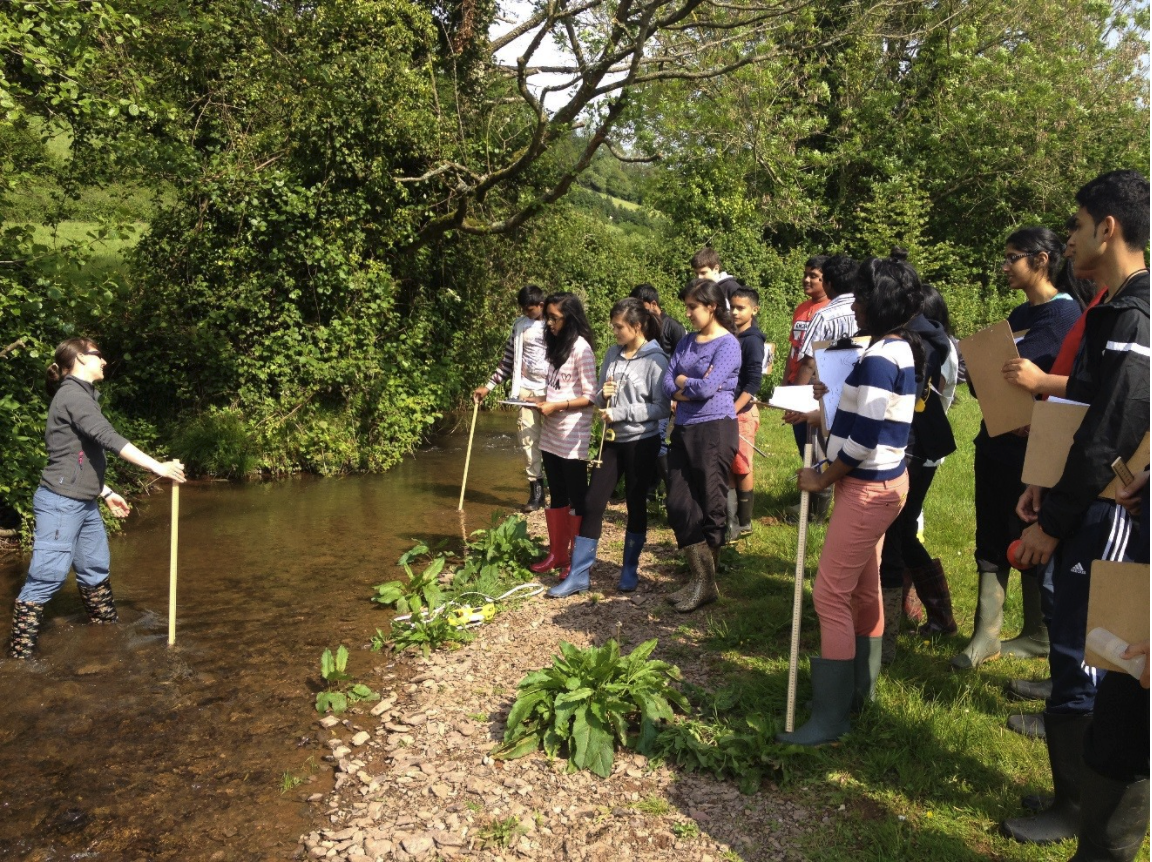
Year 10 students investigating the River Holford, Exmoor National Park during their residential visit.
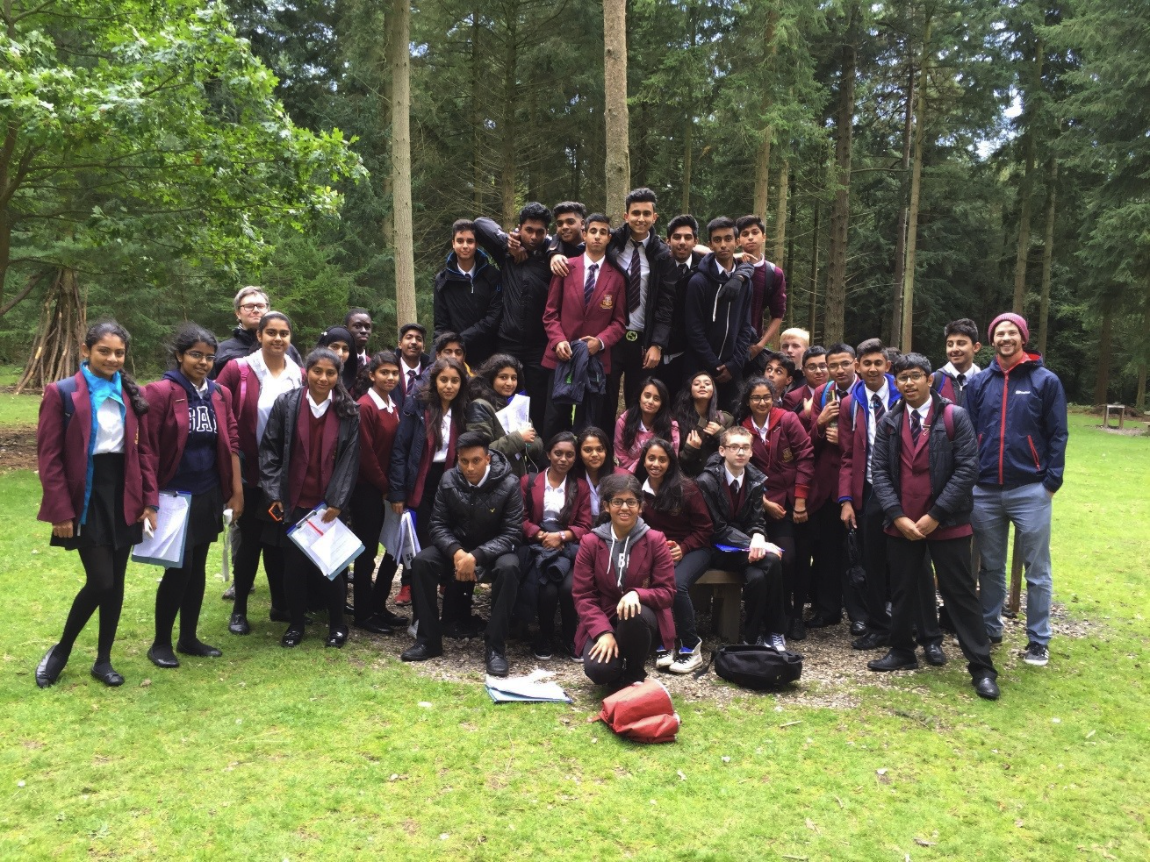
Year 11 students taking a break from investigating the impact of tourism upon Bolderwood Deer Sanctuary, New Forest National Park.

Welcome to GCSE Geography at Upton Court Grammar School!
Our Mission: The UCGS Geography department ensured that all students became global citizens, developed a clear sense of place and a curiosity about the world in which they live.
The following quote from Sir David Attenborough on Blue Planet explains why Geography is the must have GCSE subject…
‘We are at a unique stage in our history; never before have we had the awareness of what we are doing to the planet and never before have we had the power to do something about that’
Preparing for your GCSEs
The Geography department provide all students with a range of opportunities to challenge their understanding of the British Isles and wider world. In addition, they will develop skills such from mathematical to cartographic and analytical to graphical which will prepare for GCSE exams, further education and the world of employment. The GCSE course builds upon and develops understanding from Key Stage 3 with students studying Physical (P) and Human (H) Geography in equal measure. Students are actively encouraged to apply their understanding so that they can explain the increasingly complex world that they will inherit. Amidst the huge changes to GCSE specifications and grading systems we have decided to remain with the AQA exam board and the course is examined and structured as in the tables below.
How is the AQA Geography GCSE examined?
|
Unit 1: Living with the Physical Environment (35% of GCSE) |
Unit 2: Challenges in the Human Environment Geography (35% of GCSE) |
Unit 3: Geographical Application (30% of GCSE) |
|
Physical Landscapes in the UK: Rivers and coastal landscapes. Challenge of Natural Hazards: earthquakes and volcanoes, hurricanes, extreme weather, climate change The Living World: Local ecosystems, tropical rainforests and cold environments |
The Changing Economic World: global patterns of development and the development gap. Urban Challenges: global patterns of urbanisation, and two contrasting city case studies. The Challenge of Resource Management: Use of energy resources in the UK and global resource scarcity. |
Issue Evaluation: based upon pre-release material Physical Fieldwork: A river or coastal investigation Human Fieldwork: An investigation into a settlement
|
How is GCSE Geography structured at UCGS?
|
Year 9 |
Year 10 |
Year 11 |
|
Physical Landscapes of the UK (P) – River Landscapes – Coastal Landscapes
Urban Challenges (H) – Lagos, Nigeria – London, UK
(H) = Human Geography. (P) = Physical Geography |
The Challenge of Resource Management (H) – UK overview – Food as a resource (H)
The Living World (P) – Rainforests (Amazonia) – Cold Environments (Alaska)
Physical Fieldwork: A local river investigation
Residential visit to Exmoor, Somerset |
The Changing Economic World (H) – Nigeria – UK
The Challenge of Natural Hazards (P)
Issue Evaluation (H/P) based upon a pre-release issued in March of Year 11
Human Fieldwork: An investigation into quality of life
|
Achieving your full potential
Undertaking GCSEs can be intimidating but the Geography department provide a range of resources and support to aid your learning. To achieve your potential as a Geographer you should do the following:
- Be active and engage in your MS Team as this forum will offer revision and extension material. It’s also an opportunity for you to share your own wider reading.
- Use the Geography lesson resources, Personal Learning Checklists (PLCs) and knowledge organisers are all available on SharePoint to check on your learning to date and to read ahead.
- Complete the super-curricular activities on SharePoint to develop the depth of your knowledge
- Use in class and homework opportunities to create revision resources on cue cards, post its, mind maps, mnemonics or quizzes that you could post on MS Teams
- Consolidate and extend your learning by using the following websites:
- http://www.aqa.org.uk/subjects/geography/gcse/geography-8035 (this is the official AQA webpage that has detailed information about the course and specimen papers
- http://www.doddlelearn.co.uk/geography (a really good revision site which has been updated for the new AQA specification).
- http://www.coolgeography.co.uk/ (this site is great for AQA Geography)
- https://www.bbc.co.uk/bitesize/examspecs/zy3ptyc (there lots of videos, interactive games and test bites on BBC Bitesize to check your understanding plus it’s written for AQA)
- https://revisionworld.com/gcse-revision/geography (this contains the key ideas but is not specifically for the AQA syllabus)
http://digimapforschools.edina.ac.uk/ (you will need to get the password from your Geography teacher but this site is great for developing your cartographic skills)
- https://www.geographyinthenews.org.uk/ (great for current Geographical news stories)
Using C.O.P.E strategies in Geography
Consolidating Learning
Research shows that reviewing information soon after it has been learnt allows students to remember much more. Returning to the learning from a lesson later in the same day will allow you to be much more successful.
Organising Learning
You will complete a significant amount of classwork, homework, independent work and other activities in preparation for your GCSE exams. Successful students find ways to organise their time and learning effectively so that it is of use to them.
Preparing Revision Materials
Successful students prepare for revision and revise earlier topics throughout the year – this means creating revision materials throughout the year in preparation for the exam period. They will also revise constantly so they do not become rusty on earlier topics. They use in class assessments and Pre-Public exams to perfect their revision strategies.
Exam Practice
Ultimately, your success will be measured in the public exams at the end of Year 11. Successful students practice many past papers, find effective ways to monitor and improve their exam technique, and are very familiar with the mark scheme and how it will be applied.